Abstract: In the ready-to-eat (RTE), meal kit, and pet food industries, retort pouches are rapidly replacing traditional metal cans due to their lightweight nature, high-temperature resistance, and extended shelf life. However, not all retort pouches are created equal. This guide delves into the core composite materials of retort packaging and provides a scientific decision-making matrix to help brands choose the perfect packaging solution based on product profile, acid levels, fat content, and retail intentions.

1. Why Choose Retort Pouches?
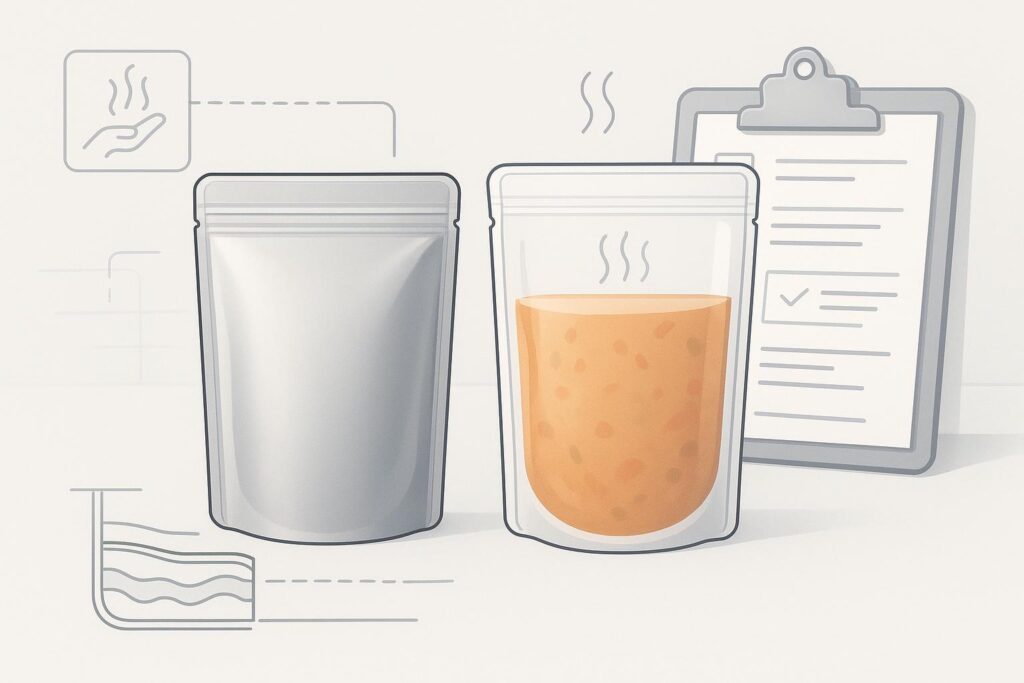
A retort pouch is a type of flexible food packaging made from multiple layers of composite plastic (or metal foil). Its core advantage lies in its ability to withstand thermal processing and high-pressure sterilization (typically at 121°C / 250°F or higher for several minutes).
Compared to traditional metal cans or glass jars, retort pouches offer unmatched commercial benefits:
- Thinner Profile, Faster Sterilization: Heat penetrates the flat, flexible pouch much faster. This reduces the time the food is exposed to high heat, better preserving its original flavor, texture, and nutritional value.
- Drastically Reduced Logistics Costs: Empty pouches take up minimal space and are incredibly lightweight, significantly cutting down transportation and warehousing expenses.
- Ultimate Consumer Convenience: Features like tear notches eliminate the need for can openers. Additionally, many transparent or non-foil structures allow consumers to heat the meal directly in the microwave.
2. Decoding the Three Core Composite Structures
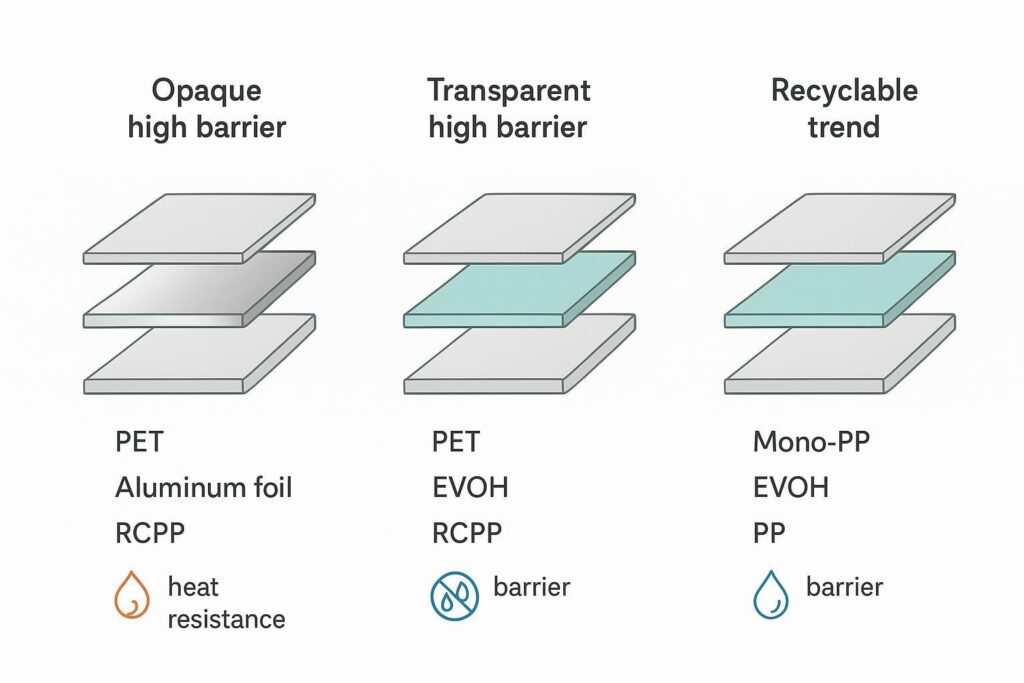
To survive the rigorous thermal sterilization process while providing excellent barrier properties, retort pouches must utilize multi-layer lamination technology. Based on the product profile, we primarily offer the following three mainstream material structures:
Structure A: Opaque High Barrier
- Typical Composition:
PET / Aluminum foil / RCPP - Material Breakdown: The outer PET layer provides excellent printability and heat resistance. The middle Aluminum foil layer is the absolute best barrier material available, blocking 100% of light, oxygen, and moisture. The innermost RCPP (Retort Cast Polypropylene) is the core heat-sealing layer specifically designed to endure high-temperature retort processes.
- Best For: Products requiring maximum barrier protection and an extended shelf life (e.g., 12–24 months), where product visibility is not required.
Structure B: Transparent High Barrier
- Typical Composition:
PET / EVOH / RCPP - Material Breakdown: If your product needs to showcase its appetizing appearance on the shelf, or if it requires microwave heating (aluminum foil is not microwave-safe), this is the optimal choice. We utilize high-barrier EVOH or specialized coatings instead of foil to provide robust barrier performance while maintaining transparency and microwave compatibility.
- Best For: Fresh ready meals, microwavable soups, and premium wet pet foods.
Structure C: Recyclable Trend
- Typical Composition:
Mono-PP / EVOH / PP - Material Breakdown: As global demand for eco-friendly packaging surges, mono-material systems are becoming the industry standard. By utilizing an all-PP (Polypropylene) structure combined with an EVOH barrier layer, this packaging is much easier to process in the plastic recycling stream after use.
- Best For: Innovative food brands prioritizing ESG strategies and sustainable development.
3. Scientific Decision-Making: How to Choose the Right Material?
Different food properties present entirely different challenges for packaging. At FlexiPack, we highly recommend utilizing the following Product Profile decision tree to make a scientific choice:
Key Consideration 1: Acid Level & Particulates
- High Acid / High Particulates: Highly acidic foods can interact with certain packaging layers. If the product is highly acidic or contains high particulates/viscosity, standard foil structures (
PET/Al/RCPP) or specialized high-barrier structures must be carefully evaluated to prevent layer delamination. - Low Acid / Smooth: Focus on the presentation. If you want a smooth, clear display, opt for a transparent structure (
PET/EVOH/RCPP). If maximum light protection is needed, select the opaque foil structure.
Key Consideration 2: Oil/Fat Content & Target Shelf Life
Oils and fats are highly susceptible to oxidation and rancidity when exposed to high temperatures or oxygen.
- Shelf Life > 12 Months: If the fat content is high and the target shelf life is over a year, you must select the highest barrier Opaque Aluminum Foil structure (
PET/Al/RCPP). - Shelf Life ≤ 12 Months: If the target shelf life is shorter, or if there are specific retail requirements, transparent high-barrier materials (containing EVOH) are highly effective alternatives.
Key Consideration 3: Special Intentions
- Microwave Intention?
- Yes: You absolutely cannot use aluminum foil. You must choose a microwave-safe structure (e.g.,
PET/EVOH/RCPPorMono-PP/EVOH/PP). - No: The classic foil structure (
PET/Al/RCPP) is recommended for the best cost-to-barrier ratio.
- Yes: You absolutely cannot use aluminum foil. You must choose a microwave-safe structure (e.g.,
- Recyclability Priority?
- Yes: Opt for a mono-material structure that aligns with sustainability trends (e.g.,
Mono-PP/EVOH/PP).
- Yes: Opt for a mono-material structure that aligns with sustainability trends (e.g.,
FlexiPack: Your Trusted Flexible Packaging Experts
Customizing retort food packaging is a precise engineering process. Even a minor miscalculation in material selection can lead to burst pouches during sterilization or a compromised shelf life. At FlexiPack, our packaging engineers will tailor the safest and most efficient composite structure for you, based on your specific food recipe, sterilization parameters, and market positioning.