
Abstract: Great coffee requires exceptional packaging to protect its flavor profile. For coffee roasters and brands, customizing the perfect pouch is not just about visual appeal—it involves strict technical requirements for freshness preservation. This comprehensive B2B guide covers everything from dieline artwork specifications and core valve components to selecting high-barrier materials (OTR/WVTR) and troubleshooting common production issues.
1. Visual Design & Dieline Specifications
When designing artwork for coffee packaging—whether it is a stand-up pouch, flat-bottom bag, or side-gusset bag—strictly adhering to the dieline specifications is critical to ensure a flawless print result.
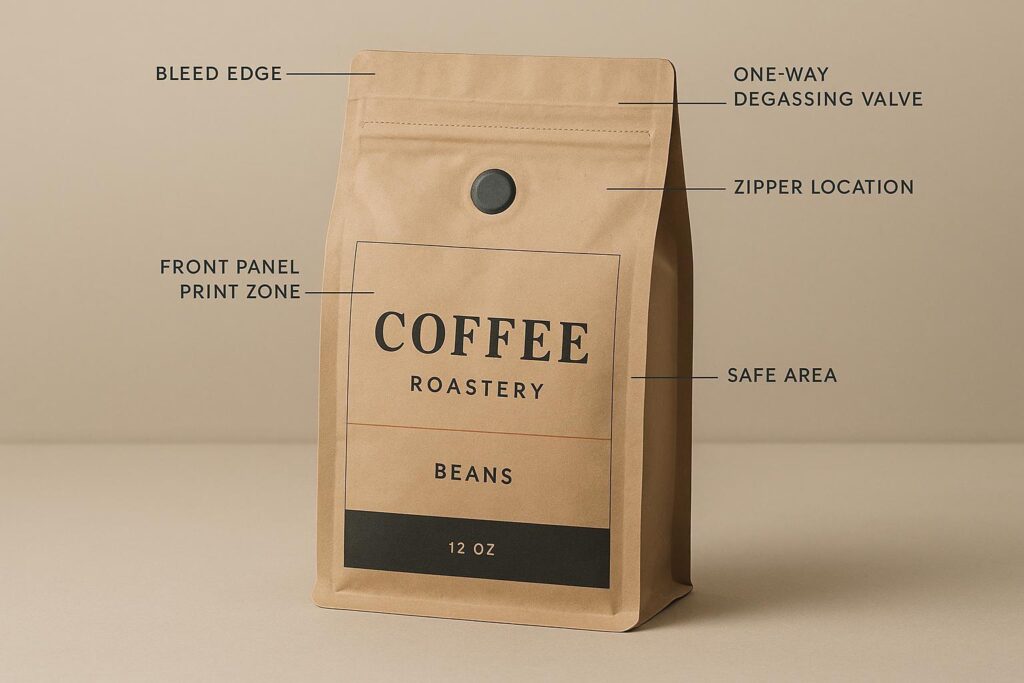
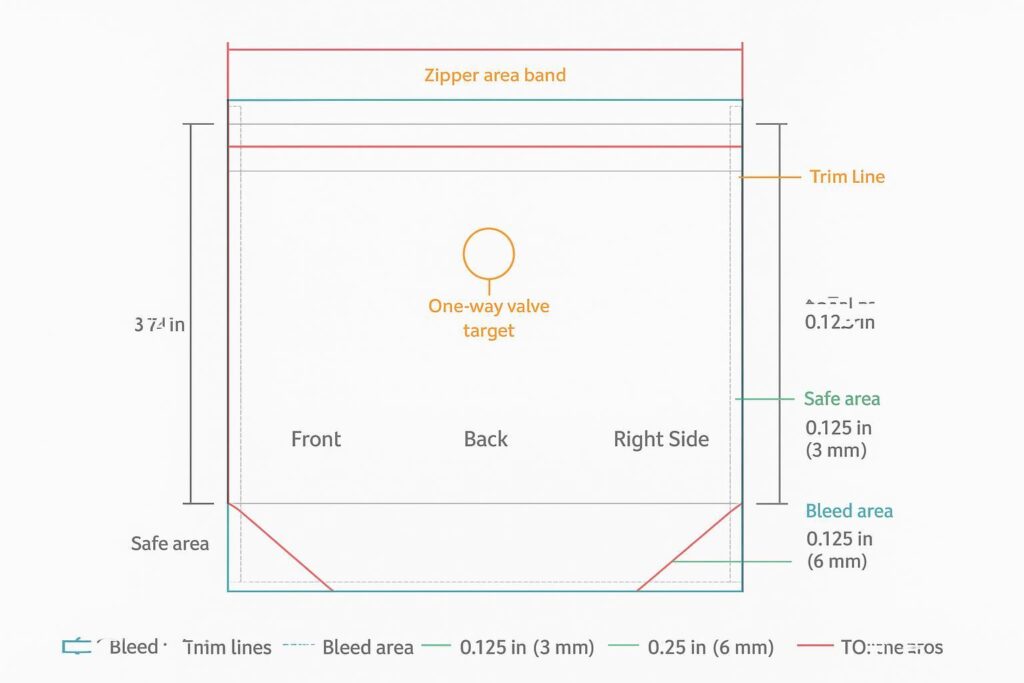
- Bleed Area / Bleed Edge: Background colors and full-bleed graphics must extend into this area (typically 0.125 in or 3–6 mm past the trim line) to prevent unprinted white edges during the bag-making and cutting process.
- Trim Line: This represents the actual physical cut edge of the finished pouch.
- Safe Area: All critical brand elements, logos, and text (e.g., “12 OZ”, “COFFEE ROASTERY”) must be placed at least 0.125 in (3 mm) inside the trim line. This prevents panel cutoff or having essential artwork folded over.
- Functional Zones: When designing the Front Panel Print Zone, ensure no critical artwork crosses the Zipper area band or the One-way valve target.
2. Core Functional Components: Valves, Seals, and Tear Notches
Freshly roasted coffee beans continuously release carbon dioxide. If not vented, the bags will bloat or burst; concurrently, oxygen ingress will rapidly degrade the coffee’s flavor. Precision in component placement is vital:
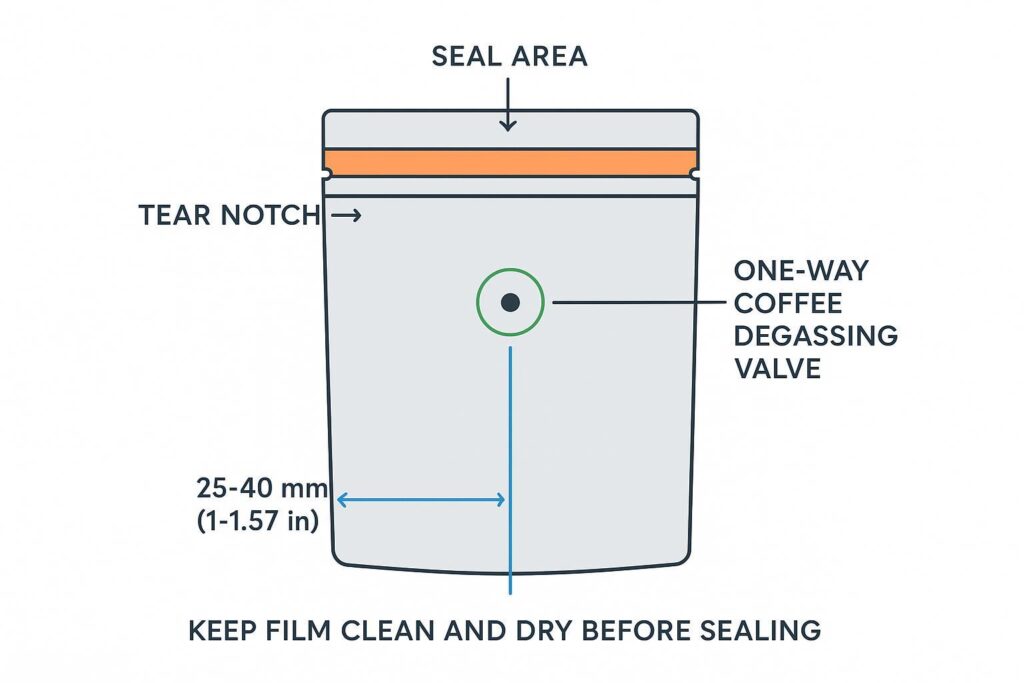
- One-Way Coffee Degassing Valve: The “heart” of a coffee bag. It allows trapped CO2 to escape while blocking external oxygen. It is typically centered on the panel, with the target location situated 25–40 mm (1–1.57 in) from the designated reference lines.
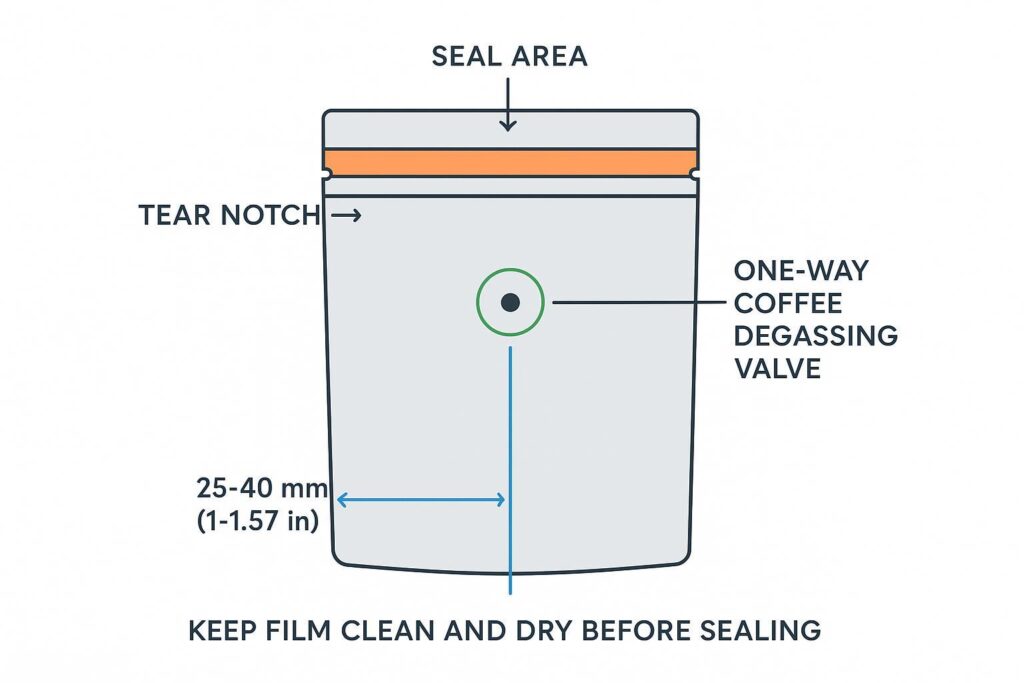
- Seal Area & Tear Notch: A robust top seal area guarantees structural integrity during transit, while the tear notch positioned just below it offers easy opening for the end consumer.
- 💡 FlexiPack Pro Tip: Keep film clean and dry before sealing. Any coffee oil or dust contamination in the seal area will compromise the barrier, leading to weak or leaking seals.
3. Preserving Freshness: Scientific Barrier Selection (OTR & WVTR)
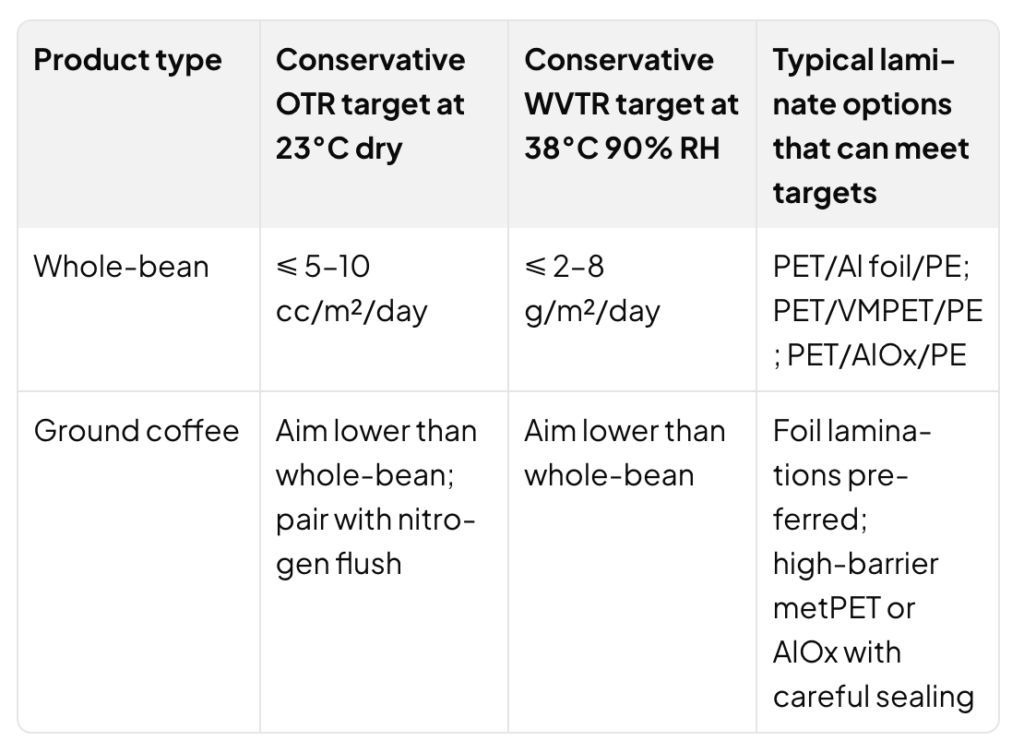
Different coffee formats (whole-bean vs. ground coffee) have varying sensitivities to oxygen and moisture. Selecting the right laminations requires looking at specific targets for Oxygen Transmission Rate (OTR) and Water Vapor Transmission Rate (WVTR).
4. Troubleshooting Common Packaging Issues
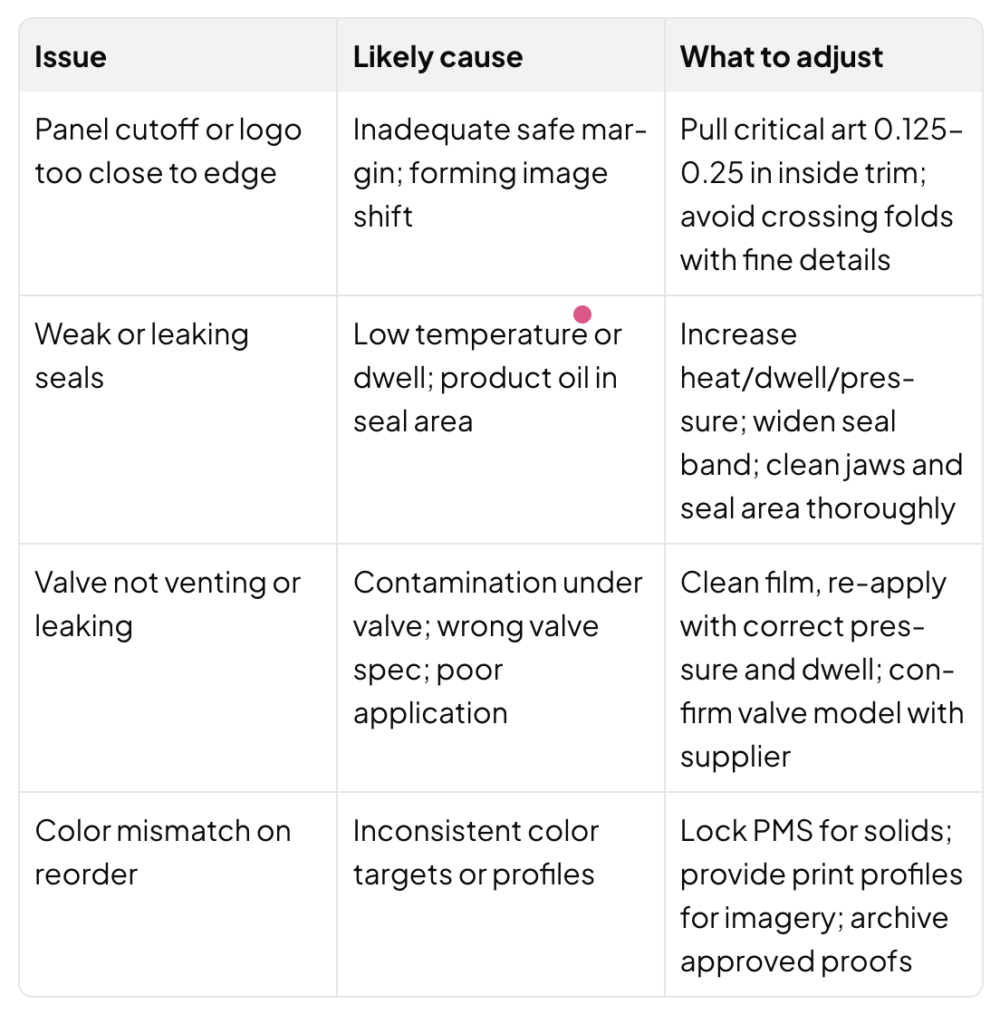
During mass production, filling, or sealing, occasional challenges may arise. Here is a quick reference guide to identifying the root causes and adjusting your processes:
Need Custom Coffee Packaging Solutions?
Professional coffee packaging is a meticulous blend of branding art and industrial-grade preservation. At FlexiPack, we offer comprehensive B2B packaging solutions—from accurate dieline templates and optimal barrier material recommendations to flawless rotogravure printing.